Reviewing the 100 Days of 7th Grade Design
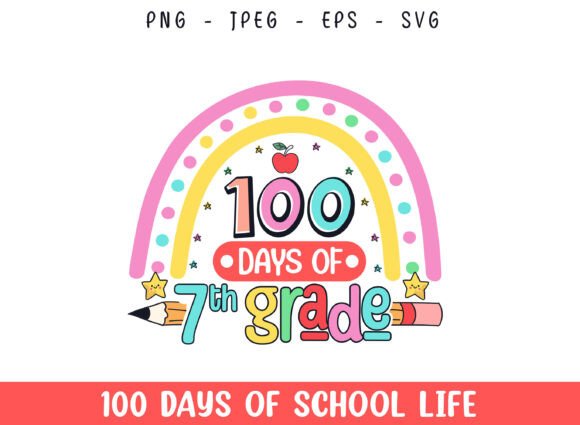
As an embroidery designer who has spent years digitizing and testing files for real-world production, I approach every new machine embroidery design with a critical eye. It is not enough for a graphic to look good on a screen; it must hold up under the needle, withstand washing, and appeal to the end customer. Recently, I evaluated the 100 Days of 7th Grade School Life Design, a piece categorized under Crafts and Graphics, to determine its viability for commercial and personal projects. This review breaks down how this specific asset performs when moved from a digital concept to a stitched reality.
First Impressions and Visual Personality
The immediate appeal of the 100 Days of 7th Grade School Life Design lies in its thematic clarity. Celebrating the 100th day of school is a significant milestone in elementary education, and seventh grade adds a unique transitional vibe between childhood and young adolescence. The design captures this balance well. Visually, it feels structured yet playful, avoiding the overly childish motifs often found in kindergarten-centric designs while maintaining the fun energy required for a school celebration.
From a layout perspective, the composition appears balanced. For an embroidery project, this is crucial. Uneven weight distribution can cause hoop burn or fabric distortion, especially on lighter materials. The design’s structure suggests it was created with vector precision, noted in the description as being made with 100% vector sources. This origin is promising because vector-based graphics typically translate cleaner into stitch files, allowing for smoother curves and sharper corners compared to pixelated raster images.
Real-World Application: The Sweatshirt Test
To truly understand the value of this embroidery file, I imagined a common scenario for small business owners and Etsy sellers: a parent ordering a custom sweatshirt for their seventh grader. Sweatshirts are a staple for school spirit wear, but they present challenges due to their thickness and texture.
If I were stitching this design onto a cotton-blend hoodie, the 100 Days of 7th Grade School Life Design would need to have appropriate stitch density. If the fill areas are too dense, the garment becomes stiff and uncomfortable. If they are too sparse, the underlying fabric shows through, ruining the visual impact. Given that this design is marketed for easy color changes, it likely relies on solid blocks of color rather than complex shading. This is a practical advantage for custom apparel, as solid fills stitch faster and are more durable than intricate gradient simulations.
I also considered its use on a tote bag design. Canvas bags are popular for carrying school projects and books. Here, the design’s durability is key. A well-digitized file will use underlay stitches effectively to anchor the top stitches into the woven canvas, preventing shifting during heavy use. The bold nature of a "100 Days" theme suits the rugged texture of canvas, making it a strong candidate for handmade product lines targeting back-to-school sales.
Navigating Fabric and Hoop Constraints
While the design is versatile, there are areas where caution is necessary. The description mentions it is suitable for dark t-shirts or white t-shirts. This flexibility is excellent, but it requires careful planning regarding thread colors and stabilizers. On a dark t-shirt, a light-colored design needs a strong underlay or a backing layer to prevent the dark fabric from peeking through the stitches. Without this, the crispness of the Graphics is lost.
For those considering this for baby embroidery or smaller items like caps, hoop size is a limiting factor. Seventh-grade-themed designs often include text or larger numerical elements. If the 100 Days of 7th Grade School Life Design includes fine lettering, it may not scale down well for a 4x4 inch hoop without losing legibility. Tiny satin stitches can become bulky and prone to snagging. Therefore, I recommend checking the actual dimensions of the digitized file before attempting to place it on curved surfaces like hats or small patches.
Additionally, textured fabrics pose a risk. If you are stitching on a waffle-knit thermal or a fuzzy fleece, the details of the design might get lost. In such cases, using a cut-away stabilizer is non-negotiable to provide a firm foundation for the needle. For stretchy fabrics, a poly-mesh stabilizer can help maintain the shape of the design after repeated washing.
Commercial Viability for Craft Businesses
For Etsy sellers and craft business owners, the commercial potential of this design hinges on its uniqueness and ease of customization. The ability to easily change colors is a significant selling point. It allows a seller to offer personalized options—school colors, favorite hues, or gender-neutral palettes—without needing to re-digitize the file. This adaptability increases the perceived value of the finished product.
However, professionalism is paramount. Customers judge the quality of a personalized gift by the neatness of the stitching. If the 100 Days of 7th Grade School Life Design has poorly optimized jump stitches or excessive thread trims, it increases production time and reduces profit margins. Before listing this as a small shop product, I advise running a test stitch-out on scrap fabric identical to your final material. Check for thread breaks, puckering, or registration issues where different color sections meet.
Using this design in commercial embroidery also requires verifying licensing terms. While the product description highlights its vector origins and ease of use, it does not explicitly state the license type for resale. Always confirm whether the purchase includes a commercial license for physical goods or if it is restricted to personal use. Selling unauthorized design assets or finished items can lead to legal complications for your boutique branding.
Practical Designer Notes for Best Results
To ensure the best outcome with the 100 Days of 7th Grade School Life Design, consider these technical steps:
- Test on Scrap Fabric: Always stitch a sample on the same material you intend to sell. This reveals issues with tension and density before you commit to a customer’s garment.
- Check Thread Contrast: Use high-contrast thread colors against the fabric background to ensure the design pops. For dark shirts, consider using a white or light gray underlay.
- Review Stitch Density: If the design feels stiff after stitching, reduce the density in your editing software if possible, or switch to a lighter weight fabric.
- Confirm Hoop Size: Ensure the design fits comfortably within your hoop with adequate margin for clamping, especially for larger sweatshirt fronts.
- Inspect Small Details: Zoom in on the digitized file to check for tiny, isolated stitches that may cause thread nests or breaks.
- Use Proper Stabilizer: Match the stabilizer to the fabric. Cut-away for knits, tear-away for wovens, and wash-away for delicate or sheer materials.
- Verify Licensing: Before selling any holiday embroidery or school-themed items, read the license agreement provided by the designer to ensure compliance.
Final Verdict on the Design Asset
The 100 Days of 7th Grade School Life Design offers a solid foundation for embroidery projects targeting the school market. Its vector-based origin suggests clean lines and scalability, which are essential for professional-looking appliqué design or standard fill work. While it requires careful attention to stabilizer choice and fabric compatibility, its versatility across t-shirts, totes, and sweatshirts makes it a valuable addition to a designer’s library.
For makers looking to expand their digital embroidery file collection, this design provides a practical, timely theme that resonates with parents and students alike. By focusing on technical execution and quality control, you can transform this digital graphic into a high-value handmade product that stands out in a crowded marketplace. Remember, the success of the final item depends not just on the design itself, but on the skill and care applied during the stitching process.